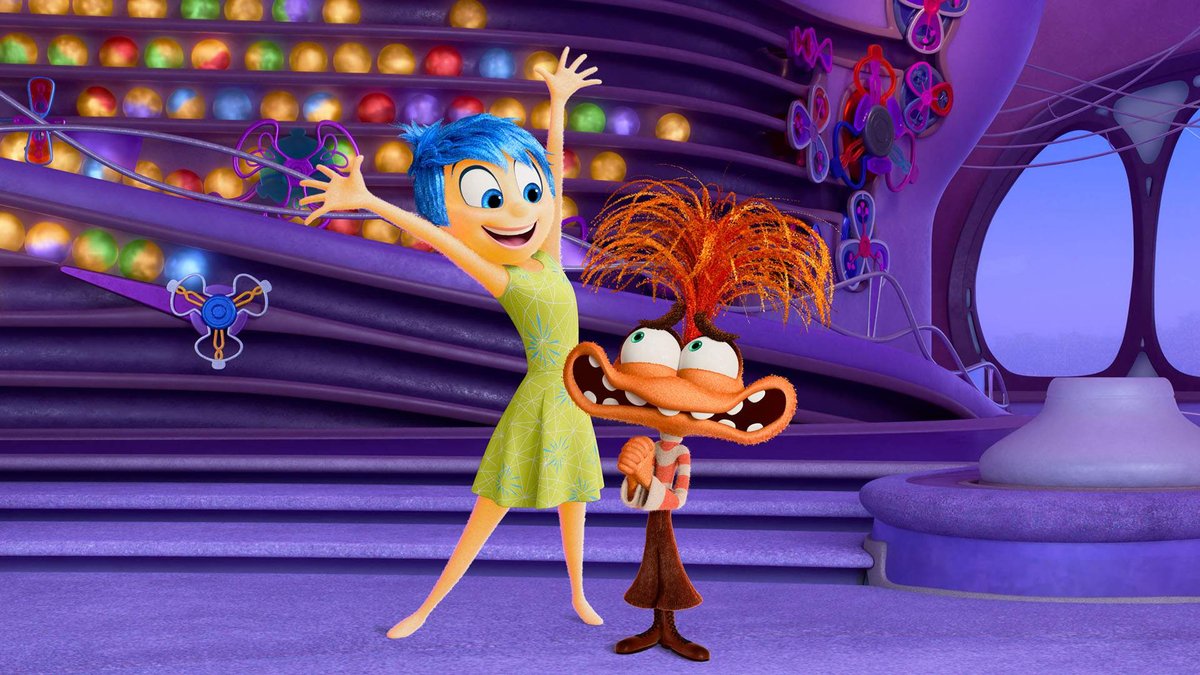
Adolescence: a rollercoaster of growth, self-discovery, and, let's be honest, often bewildering emotional shifts. If the first Inside Out beautifully mapped the core feelings of childhood, then Pixar’s Inside Out 2 & The Expanding Emotional Landscape dives headfirst into the tumultuous, exhilarating, and sometimes terrifying world of being 13. Releasing June 14, 2024, and directed by Kelsey Mann, this highly anticipated sequel doesn't just revisit Riley's mind; it reimagines it entirely, introducing a vibrant, chaotic ensemble of new emotions that perfectly capture the intricate dance of teenage identity.
For anyone who’s ever been a teenager—or is currently raising one—this film isn't just entertainment. It’s a mirror, a conversation starter, and a profound validation of the complex inner lives we all navigate as we grow.
At a Glance: What "Inside Out 2" Offers
- A Deeper Dive into Adolescence: Follows 13-year-old Riley as she confronts puberty and the social pressures of her teenage years.
- New Emotional Players: Introduces Anxiety, Envy, Ennui, and Embarrassment, dramatically expanding Riley's inner world.
- Relatable Challenges: Explores themes of peer pressure, self-doubt, the pursuit of external validation, and navigating shifting friendships.
- Identity at Stake: Highlights the critical journey of preserving one's true identity amidst the desire to fit in.
- A Call for Self-Acceptance: Reinforces the importance of embracing all emotions, even the uncomfortable ones, as integral to growth.
- Visual & Emotional Artistry: Pixar’s signature blend of humor, poignancy, and stunning animation brings these complex emotional landscapes to life.
The Original Crew Meets Their Teenage Replacements: A Mind Under Renovation
Remember Joy, Sadness, Fear, Disgust, and Anger? They were Riley’s steadfast companions through childhood, a perfectly balanced (or delightfully imbalanced) team steering her through elementary school triumphs and tears. But as Riley crosses the threshold into her teenage years, hitting that pivotal age of 13, Headquarters undergoes a massive demolition. Suddenly, the control panel isn't just getting an upgrade; it’s being completely overhauled by a whole new set of, shall we say, specialists in teenage angst.
This isn't just a fun plot device; it’s a brilliant conceptualization of how our emotional world literally transforms during adolescence. The familiar, relatively simple emotional architecture of childhood gives way to a more nuanced, often overwhelming, system designed to navigate the complexities of social hierarchy, self-perception, and future planning.
Meet the New Voices in Riley’s Head
The true genius of Inside Out 2 lies in its casting and characterization of these new emotions. Each one is a perfectly distilled representation of a universal teenage experience, vividly brought to life by a stellar voice cast.
Anxiety: The New Architect of Worry (Maya Hawke)
Front and center, an undeniable force, is Anxiety. Voiced by the perpetually compelling Maya Hawke, this orange emotion is more than just a passing feeling; she’s a planner, a strategist, and a whirlwind of nervous energy. Anxiety isn't content to simply react; she's constantly projecting, sketching out worst-case scenarios, and, crucially, trying to control them.
In Riley’s mind, Anxiety quickly takes the reins, convinced she knows what's best for Riley's future. This isn't necessarily malicious; it stems from a deep-seated desire to protect Riley from pain and ensure she succeeds. However, her method—which often involves sacrificing Riley's present joy for an imagined perfect future—puts her squarely at odds with Joy. While Joy wants Riley to live in the moment and embrace her authentic self, Anxiety pushes her towards conformity and external validation. Interestingly, Fear, an original emotion, understands Anxiety's motivations perhaps better than anyone, seeing a reflection of his own protective impulses, albeit amplified and weaponized for the teenage years.
Anxiety’s prominence in the narrative highlights a critical aspect of adolescence: the future suddenly feels vast, daunting, and full of potential pitfalls. The pressure to "get it right," to make the "right" friends, to choose the "right" path, often manifests as a pervasive, underlying hum of worry. Learning about how to recognize and manage these complex emotions in adolescence is a vital part of growing up.
Envy: The Green-Eyed Monster in Miniature (Ayo Edebiri)
Tiny and teal, Envy is brought to life by the effortlessly charming Ayo Edebiri. She’s the emotion that constantly gazes outwards, wishing Riley had what others possess. Envy perfectly encapsulates the social comparison trap that adolescence so often becomes. It’s not just about wanting things; it's about wanting to be like others, to fit in, to have the perceived ease and popularity of peers.
During the teenage years, social groups form and shift with dizzying speed. Identity is fluid, and external validation often feels like currency. Envy surfaces when Riley sees others effortlessly achieving what she desires—whether it's making a new friend, mastering a skill, or simply exuding confidence. This emotion drives a powerful, often subconscious, desire for conformity and acceptance, subtly influencing Riley's choices as she tries to sculpt herself into what she believes others want to see.
Ennui: The Art of Indifference (Adèle Exarchopoulos)
With a constant phone in hand and an eye-roll ready, Ennui, voiced by Adèle Exarchopoulos, is purple and unapologetically bored. She embodies the "whatever" attitude often associated with teenage apathy, a defense mechanism against genuine engagement. Ennui acts as the "anti-Joy," appearing when Riley attempts to suppress her true interests or passions to avoid appearing uncool or an outsider.
This emotion is particularly poignant because it speaks to the cost of social conformity. When teenagers feel pressured to hide their unique enthusiasms or pretend to be interested in things they're not, a part of them shuts down. Ennui is that part—the resigned, indifferent facade that protects vulnerability. It's a stark reminder that true happiness often comes from embracing our authentic selves, even if it means standing out. Exploring strategies to foster emotional resilience can help navigate this difficult period.
Embarrassment: The Blushing Giant (Paul Walter Hauser)
Large, timid, and perpetually hiding his face in his hoodie, Embarrassment is voiced with touching vulnerability by Paul Walter Hauser. This pink emotion emerges as Riley's social interactions become increasingly complex, particularly when she finds herself prioritizing impressing new friends over honoring old ones.
Embarrassment is the heavy cloak that descends when Riley feels exposed, awkward, or has made a social misstep. His presence highlights the heightened self-consciousness that defines adolescence. Every interaction, every outfit choice, every spoken word feels scrutinized. In the film, Embarrassment finds an unlikely ally in Sadness, perhaps because both emotions involve a degree of vulnerability and a recognition of imperfection. They represent the quiet moments when Riley realizes she might have hurt someone or compromised her values, leading to a deep, uncomfortable flush of shame.
Navigating the Treacherous Tides of Teenhood
Inside Out 2 isn't just about introducing new emotions; it's about showing them in action as Riley grapples with real, visceral teenage challenges.
The primary setting for much of this emotional drama is a competitive hockey camp. Riley, a passionate hockey player, aims to impress her idol, Val Ortiz. This pursuit of external validation becomes a fertile ground for Anxiety's influence. Under Anxiety's guidance, Riley begins to suppress her authentic self, twisting herself into what she believes Val and her new, cooler hockey friends want to see.
This desire to "level up" socially comes at a cost. Her relationships with her best friends, Grace and Bree, are tested as the looming separation for high school adds another layer of pressure. Riley’s inner world becomes a battlefield where the desire for new acceptance clashes with the comfort of established loyalty. This resonates deeply with anyone who has experienced the painful shift in friendships during adolescence, or parents wondering how to best support their teenagers through these transitions.
Beyond the Screen: The Real-World Echoes of Inside Out 2
The brilliance of Inside Out 2 lies not just in its animation or humor, but in its profound accuracy. It validates the inner experience of countless teenagers and offers a unique lens through which parents and educators can better understand them.
Consider the pervasive nature of peer pressure. Riley’s struggle to impress Val Ortiz and fit in with a new group mirrors the daily choices many teens face: whether to speak up or stay silent, to be true to their passions or adopt the trends of the "in-crowd." The film illustrates how easily Anxiety can co-opt this desire, pushing teens to make choices that aren’t aligned with their true self, all in the name of belonging or perceived success.
This pursuit of external validation—the idea that our worth comes from what others think of us—is a common pitfall in adolescence. It's a time when identity is being formed, and without a strong internal compass, it's easy to get lost in the opinions of others. Inside Out 2 masterfully depicts this internal tug-of-war, making it clear that the most challenging battles are often fought within.
The Power of Embracing Your Whole Self
At its core, Inside Out 2 is a powerful message about self-acceptance and preserving one's identity. The film ultimately argues that a healthy emotional landscape isn't about eliminating "undesirable" emotions like Anxiety or Envy, but about integrating them. Just as Sadness proved vital in the first film, these new emotions also have a role to play, even if it's uncomfortable.
The narrative arc emphasizes the value of teamwork, communication, and empathy among the emotions themselves. This is a metaphor for how we, as individuals, must learn to listen to, understand, and integrate all parts of ourselves. Suppressing genuine interests, as seen through Ennui, leads to a kind of emotional flatness. Embracing what truly excites or scares us, acknowledging our moments of embarrassment or envy, is crucial for developing a complete, authentic self. Learning how to cultivate emotional intelligence early on can make a significant difference.
The film champions the idea that our true strength comes not from being perpetually happy or perfectly composed, but from navigating the full spectrum of human experience with courage and self-compassion.
A Pixar Masterclass in Visual Storytelling
Beyond its thematic depth, Inside Out 2 is visually captivating. Pixar’s artistry shines through its vibrant color palettes, whimsical set pieces, and character designs that perfectly embody their emotional functions. Anxiety’s frantic energy is reflected in her sharp, orange design; Ennui’s apathy is captured in her slumped posture and constant phone-gazing.
The visual storytelling deftly balances humor with poignancy, ensuring that even the most complex emotional concepts are accessible and engaging. The way Riley's "sense of self" is physically represented, and how it gets fractured and rebuilt, is a stroke of genius that reinforces the film's core message: identity isn't static; it's a dynamic, ever-evolving mosaic. The animation serves not just as eye candy but as a powerful tool for empathy, allowing audiences to truly step inside Riley's mind and witness her transformation firsthand.
Practical Takeaways for Teens, Parents, and Educators
The beauty of Inside Out 2 is its capacity to spark vital conversations. Here’s how different audiences can leverage its insights:
For Teens: Navigating Your Inner World
- Acknowledge the Chaos: It’s okay to feel overwhelmed by new emotions. Inside Out 2 shows you're not alone; everyone's "Headquarters" gets a renovation during adolescence.
- Identify Your New Emotions: Can you recognize Anxiety, Envy, Ennui, or Embarrassment in your own life? Naming these feelings is the first step toward understanding them.
- Self-Compassion is Key: Don't beat yourself up for feeling "bad" emotions. They're part of being human. Embarrassment, for instance, often arises from caring about others' perceptions, which isn't inherently negative.
- Authenticity Over Conformity: Riley's struggle highlights the cost of suppressing your true self. While fitting in might feel important, your genuine interests and unique personality are your greatest strengths. Prioritize friends who love the real you.
- Talk About It: The film encourages an internal dialogue, but translating that outwards is crucial. Share your feelings with a trusted adult or friend.
For Parents: Understanding and Supporting Your Adolescent
- Validate, Don't Dismiss: When your teen expresses a feeling, particularly one of the "new" ones, validate their experience. Saying "I understand why you're feeling anxious about that" is far more helpful than "Don't worry about it."
- Recognize the Remodel: Understand that your teen's brain is literally rewiring itself. Their emotional responses might seem illogical or overblown to you, but they are very real to them.
- Model Emotional Intelligence: Talk about your own emotions (appropriately). Show them how you cope with anxiety or disappointment. This teaches them healthy emotional processing.
- Create a Safe Space: Foster an environment where your teen feels safe discussing difficult emotions, peer pressure, or identity struggles without judgment. This is crucial for helping them navigate the social pressures of their world.
- Watch Together: Use Inside Out 2 as a catalyst. Ask open-ended questions: "Which new emotion do you relate to most?", "Have you ever felt pressured like Riley?"
For Educators: Fostering Emotional Literacy in the Classroom
- Integrate Emotional Vocabulary: Use the film's characters to help students identify and name their own emotions. Creating a shared language can reduce the stigma around discussing difficult feelings.
- Discuss Social Scenarios: Use Riley's experiences (peer pressure, friendship changes, desire for external validation) as case studies for classroom discussions on social dynamics and healthy relationships.
- Promote Self-Awareness: Encourage journaling or reflective activities where students can explore their inner landscapes.
- Emphasize Growth Mindset: Reinforce the idea that emotions, like skills, can be understood and managed. It’s not about being perfect, but about learning and growing.
- Resource Sharing: Provide access to mental health resources and support networks within the school and community.
Common Questions About Teenage Emotions and Inside Out 2
Q: Is it normal for teenagers to feel so many new and intense emotions?
A: Absolutely. Adolescence is a period of rapid brain development, hormonal changes, and immense social pressure. It's perfectly normal for teens to experience a wider, more intense range of emotions, including heightened anxiety, self-consciousness, and a strong desire to fit in. Inside Out 2 visually represents this normal, albeit often overwhelming, internal shift.
Q: How can I tell the difference between healthy anxiety (like Riley's in the film) and unhealthy anxiety in my teen?
A: Healthy anxiety, as depicted with Riley, can motivate action (e.g., trying hard in hockey). It's temporary and proportional to the situation. Unhealthy anxiety is pervasive, disproportionate, interferes with daily life (sleep, school, social activities), and can manifest as panic attacks, constant worry, or avoidance behaviors. If you're concerned, consult a healthcare professional.
Q: What if my teen doesn't want to talk about their feelings after watching the movie?
A: Don't push them immediately. Sometimes, just knowing that these feelings are "normal" can be enough. Leave the door open for future conversations. You can say, "That movie really made me think about my own feelings when I was your age. No pressure, but if you ever want to talk about anything, I'm here." Lead by example by sharing your own reflections on the film.
Beyond the Credits: Continuing the Conversation
Inside Out 2 isn't just a sequel; it's an evolution, mirroring the complex journey of growing up. By expanding Riley's emotional landscape, Pixar has given us a powerful tool to understand, discuss, and ultimately embrace the messy, beautiful reality of adolescence.
As the credits roll, don't let the conversation end. Use this film as a springboard to open up dialogue within your family, classroom, or community about emotional intelligence, empathy, and the profound importance of self-acceptance. Because truly understanding our inner worlds—and the new emotions that constantly arrive—is the first step towards living a more authentic and fulfilling life. For more insights into the captivating narrative of Riley's emotional journey, be sure to explore the world of Inside Out.